The surprising histories behind popular gambling terms
24 October 2024
As is the case with any peculiar culture, gambling has its own lingo, with evocative words that are inextricably linked to that universe. Even though some of these words have become common enough even in everyday language, their origin is often shrouded in mystery. Well, let’s uncover some of this exciting gambling history, then, shall we?

Casino
Let’s start with “casino” itself! You can imagine what it is just fine: you’re thinking of the blinking lights of slot machines and the swift gestures of professional, impeccably dressed croupiers in a setting that breathes opulence and glamour. Few people know that the origin of the word is found in Italian, as the diminutive from of “casa”, meaning “house”.
That’s right: the first time that the word casino modern language was in reference to villas and summerhouses in the Italian countryside; these were called “little houses” to distinguish them from the main houses in the cities. Over time, these casinos grew into social clubs where elites enjoyed their leisure, and from there into the formidable public buildings where people gather for gambling entertainment and more. Talk about humble beginnings for such an important entertainment sector!
Jackpot
Mention the word “jackpot” to someone and you just know that they’ll start imagining a slot machine in a flurry of light and sound as coins come pouring out. Nowadays, it’s come to mean any large fortune that one can stumble upon. Its origin is more rooted in the gambling tradition than its widespread modern use would imply, though. In the poker variation Jacks or Better, participants put an ante in a proverbial pot to make sure that there’s a starter sum to be won before the betting actually begins.
If none of the players has a winning hand that beats jacks or better, then the hand has to be dealt again. As a consequence, additional antes have to be paid. Given enough rounds without a winning hand, the pot of combined antes can grow to a huge amount, until one lucky winner can claim it all – the “jackpot” – with the right winning hand.

Poker
Have you ever wondered why “poker” is called “poker”? Well, so have many poker historians, and surprisingly, there’s no definitive answer. In fact, there are two lines of thought that seem to combine to form the true etymology of the word poker. The most direct origin story linking the name to the game comes from early in the 19th century in New Orleans when French influence was still dominant in the culture of the city.
Back then and there, a game that closely resembled poker was called “poque”. Given the rise of poker as both a name and a game, this is usually given as the origin of the word poker. Some researchers point out that the French name “poque” itself is a bastardization of German “pochen”, meaning to brag of to bluff – terms all too familiar to avid poker players, of course. From German to French to English: no wonder poker is such an international hit!
Wild
Any self-respecting casino game, such as those at Goldenpalace.be, use the “wild” concept. In slot games, wilds can come in all sorts (expanding wilds, walking wilds, stacked wilds, sticky wilds, shifting wilds, you name it!), but they all serve the same purpose: they are stand-ins for other symbols. As such, these coveted wilds grant slot game players longer and stronger connections of identical symbols along winning lines, which in turn means bigger payouts.
The origin of the word in the gambling context seems straightforward enough, seeing that there’s the related term of “wild card”, meaning a game card that can serve the role of other cards in a game. So, why was this word chosen to indicate such a key feature in the gambling world? You can readily assume that the interpretation of “wild” as “not being bound to a singular role” is best suitable here.
Bet
From obvious gambling world usage like “sports bet” to expressions like “you bet” or “that’s a safe bet”, the word “bet” is another term that is so ubiquitous in use that people don’t question its etymology. That doesn’t mean that there nothing interesting about its appearance in language – on the contrary! The word “bet” appears in the English language in the late 16th century in circles of petty criminals who used it as slang to indicate a mutual pledge, a promise to exchange something of value based on unknown future events.
Sounds familiar? It’s not entirely known what the slang term “bet” evolved from, but the best guesses point to the verb “to abet”, which means “to incite”, and is related to “bait”. Of course, its widespread use proves that “bet” has left its shady origins in the past. Nowadays, betting is a harmless, fun, and exciting activity. Like the sports bets at Goldenpalace.be!
Blackjack
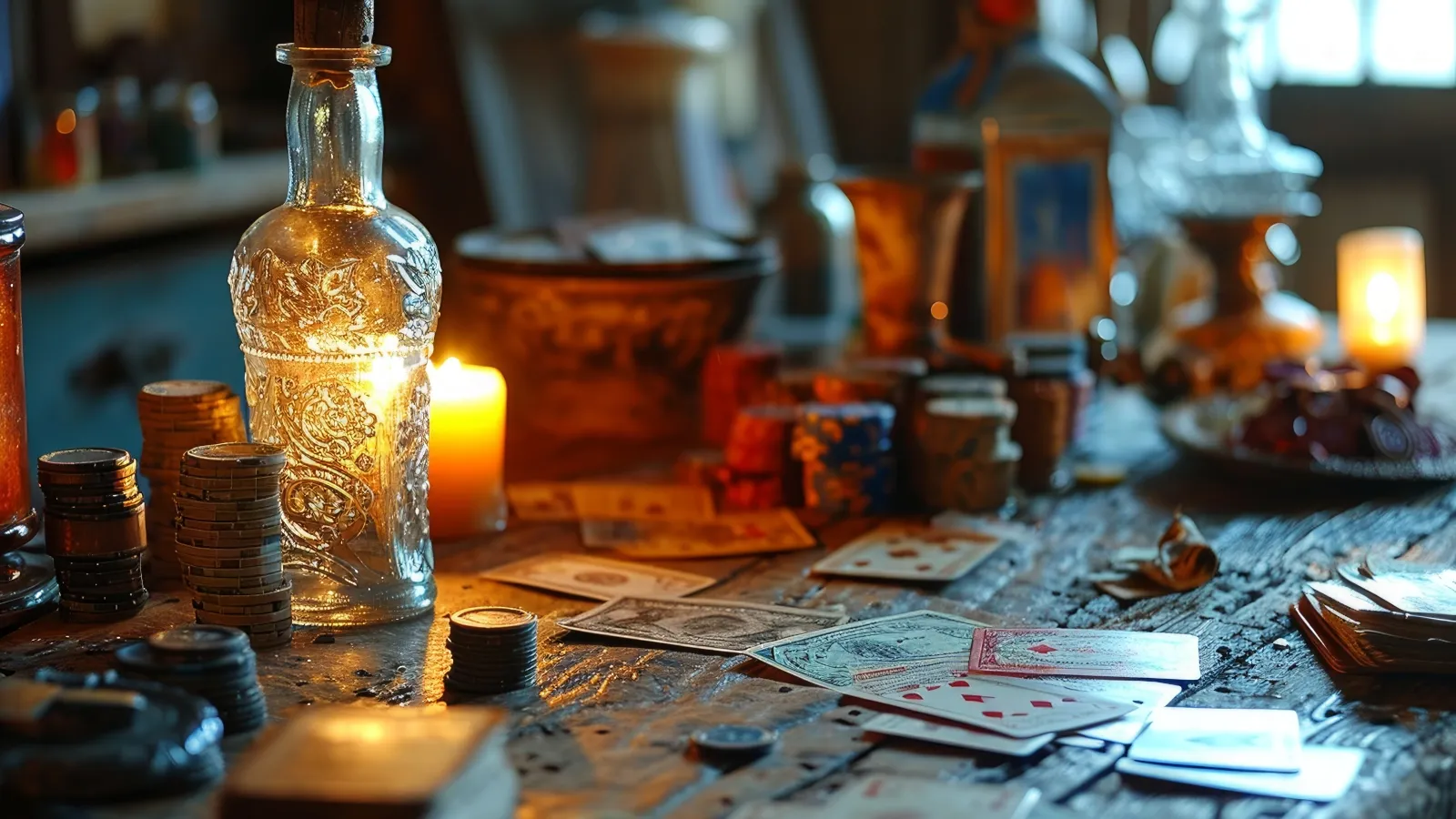
Nowadays, it’s impossible to enter a casino without finding rooms filled with blackjack tables of all sorts of betting ranges. Whether you’re a whale or a minnow, there’s always a table for players who want to take on the dealer in a classic game of twenty-one. The name twenty-one is easy enough to explain – it’s simply the sum of the card values that players have to chase. There’s not much consensus on the origin of the name “blackjack”, though.
Some look for its origin in a game played during the Klondike Gold Rush, when the word blackjack also referred to a mineral that was found along with gold or silver deposits. This version of twenty-one supposedly had a bonus payout for the ace of spades combined with any black jack to make 21. There’s no definitive proof that such a bonus ever existed. Bonuses usually consisted of any ace and any 10-point card – basically any 2-card 21. The name blackjack just stuck!